
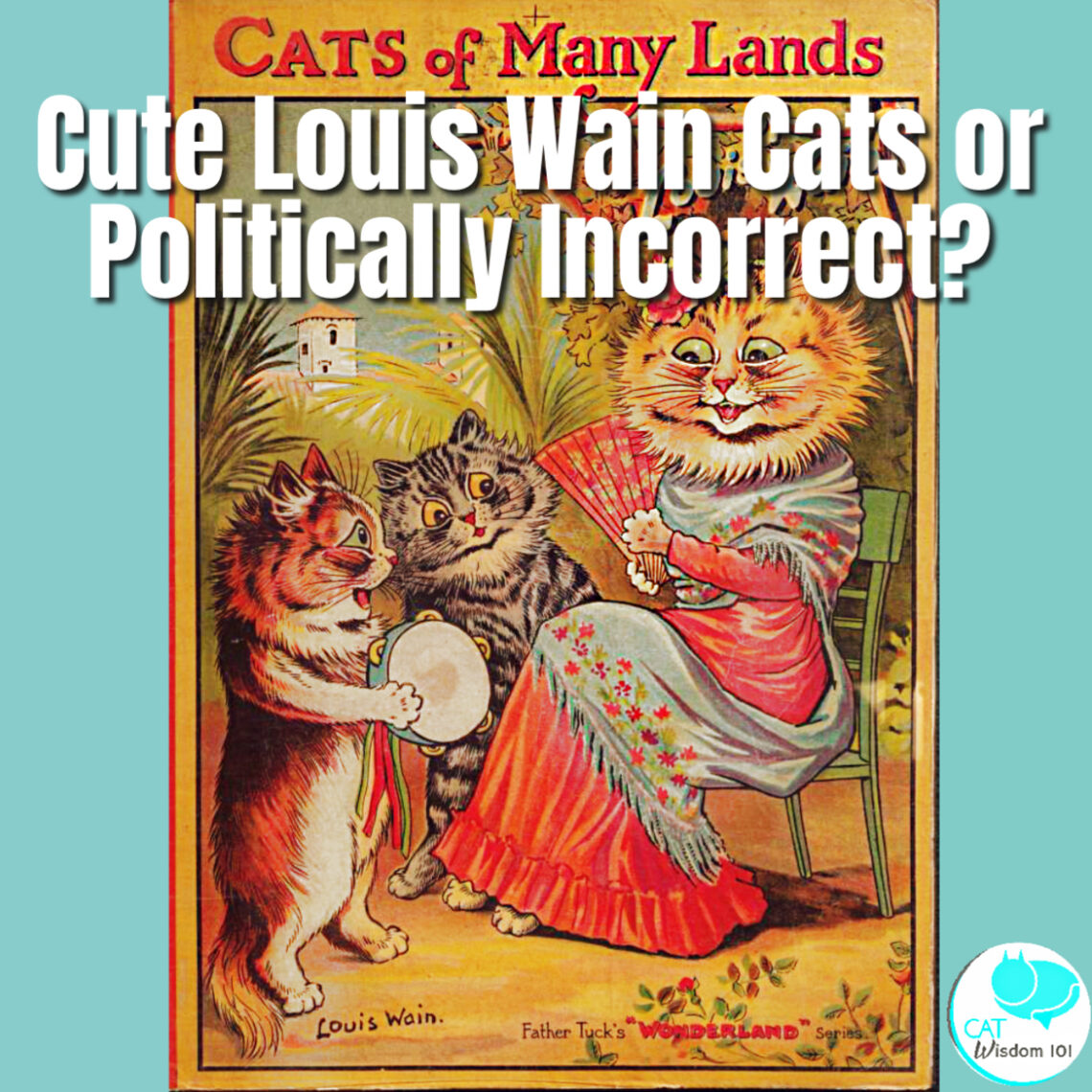
Louis Wain’s Politically Incorrect Cats of Many Lands
Louis Wain’s Cats of Many Lands is a purrfectly adorable illustrated book if not politically correct.
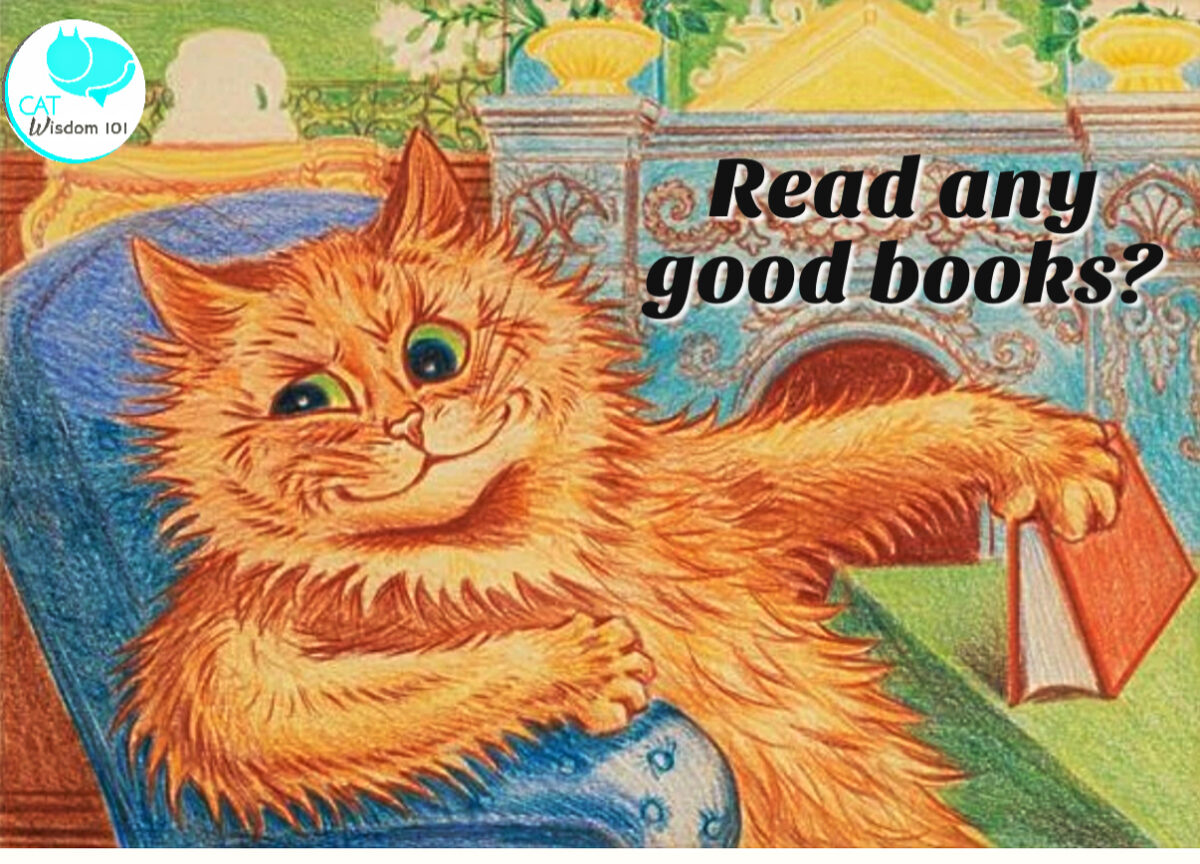
Long before cats became internet celebrities, Louis Wain turned them into actors, athletes, tourists, partygoers and global representatives.
His Cats of Many Lands, published by Raphael Tuck & Sons in 1914, is a particularly charming example. The book is unpaged and consists chiefly of color illustrations, approximately 33 centimeters tall, large enough for Wain’s lively cats and their costumes to make an immediate visual impression.
The illustrations are by Louis Wain, while the accompanying verse is credited to Norman Gale.
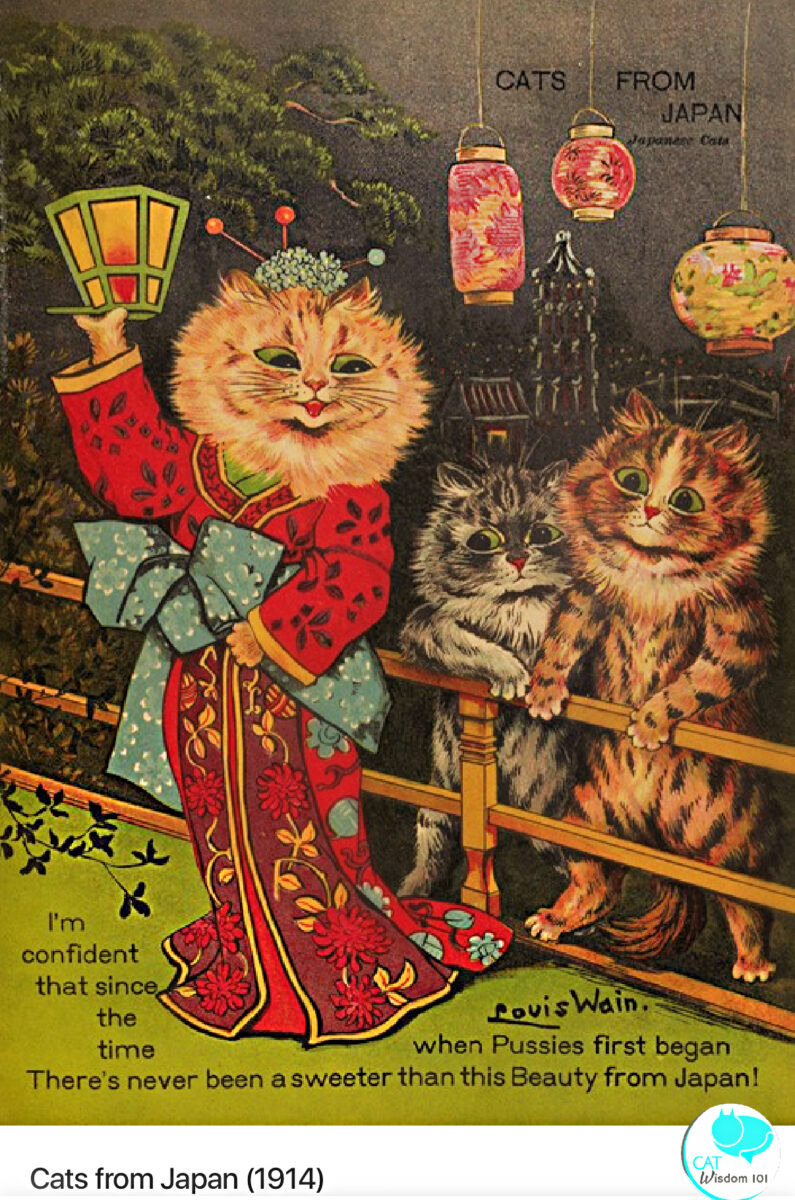
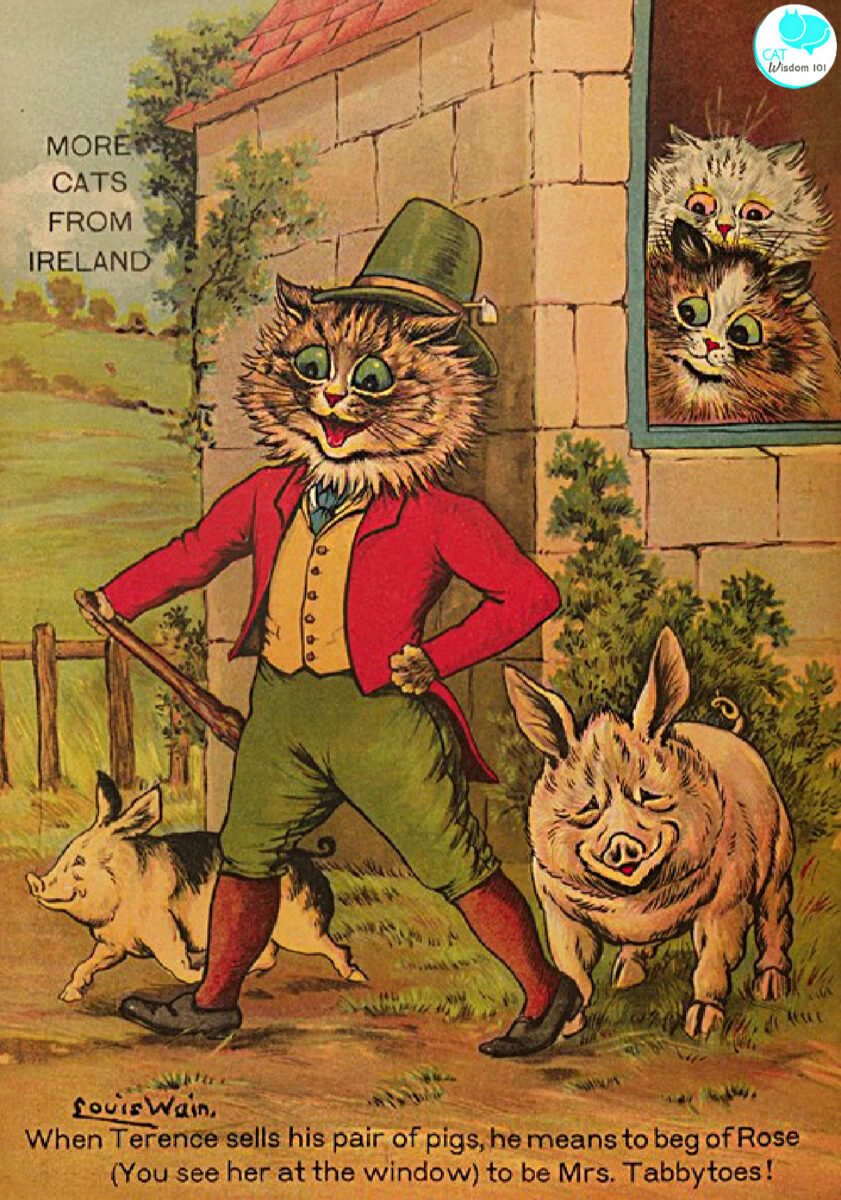
The book presents cats dressed in a selection of national or ethnic costumes, each accompanied by a short poetic caption. It’s not a travel guide in the modern sense. Rather, it is a child’s imaginative atlas: each country is reduced to a recognizable costume, gesture, or comic “character.” The result is playful, colorful, and often very funny, but it also reflects the assumptions of early twentieth-century popular culture.
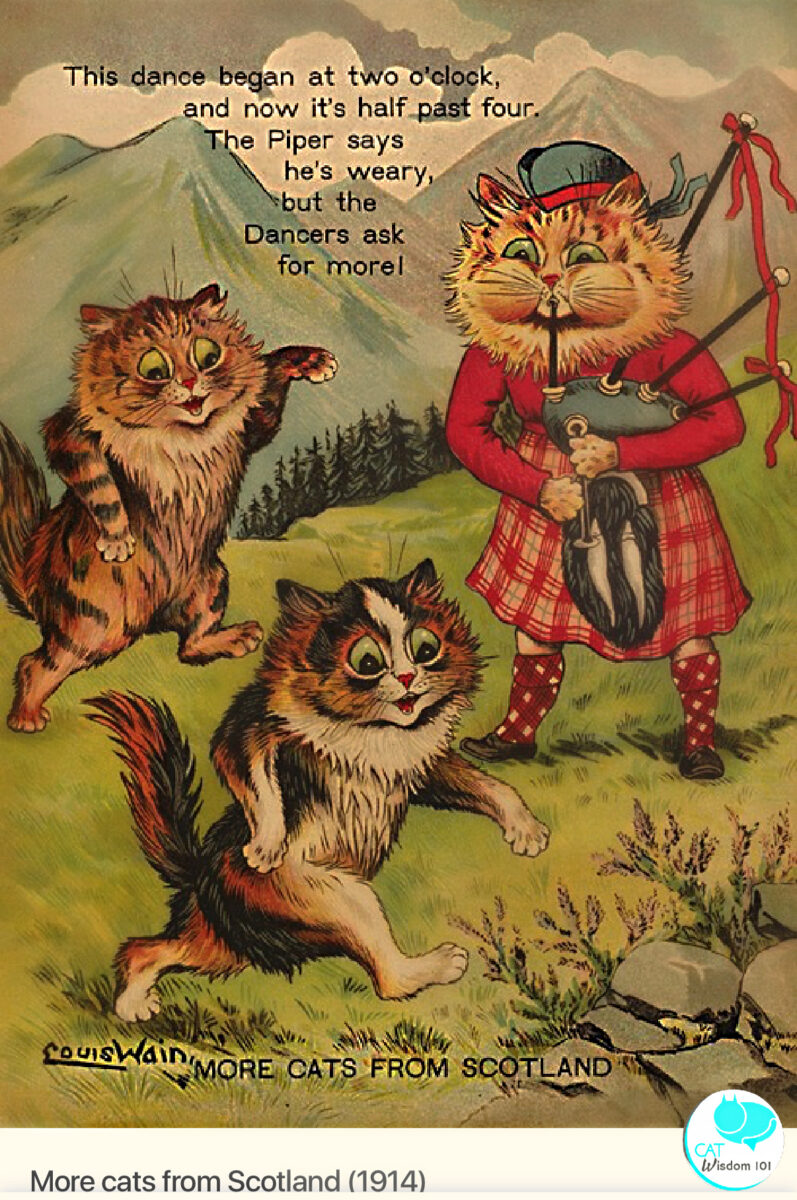
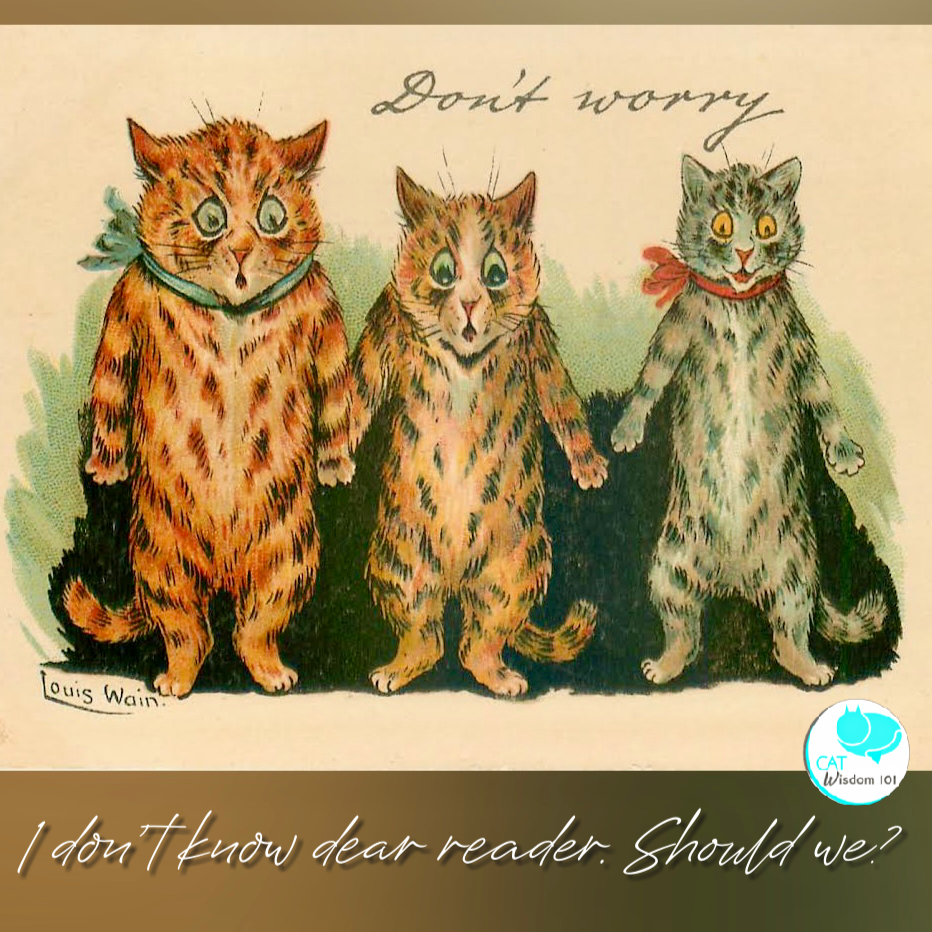
For cat lovers, the appeal is easy to understand. Wain’s cats are not merely wearing costumes; they are behaving as though the costumes are perfectly natural. They stand, walk, pose, perform, and appear to possess distinct personalities. This was central to Wain’s artistic achievement.
He helped make the anthropomorphic cat, a cat with human posture, human social life, and human expression, one of the most recognizable images in popular illustration.
A book published at a historical turning point
The 1914 publication date places the book at the beginning of World War I, but the book itself does not reflect it. It was probably conceived as part of the prewar children’s gift-book market.
Wain’s greatest popularity came in the years before World War I, when he regularly portrayed cats at play, at the seaside, in restaurants, at sporting events, and at social gatherings.
The war began in Europe in July 1914, with Britain entering the conflict in August. I’m assuming the book could easily have been designed, printed, or commissioned before the war began. Its cheerful international theme therefore should not be interpreted as propaganda or as a response to the conflict.
Germany’s absence is nevertheless an intriguing detail. Germany was one of Europe’s major powers and a prominent British rival before the war. Its omission may simply reflect the publisher’s desire to choose countries that could be represented through especially recognizable costumes. It may also reflect the increasingly tense Anglo-German relationship.
The evidence is not strong enough to say that Germany was deliberately excluded for political reasons, but the omission gives modern readers something important to notice: even a lighthearted children’s book can reveal what its culture considered familiar, picturesque, amusing or uncomfortable.
The image of North America
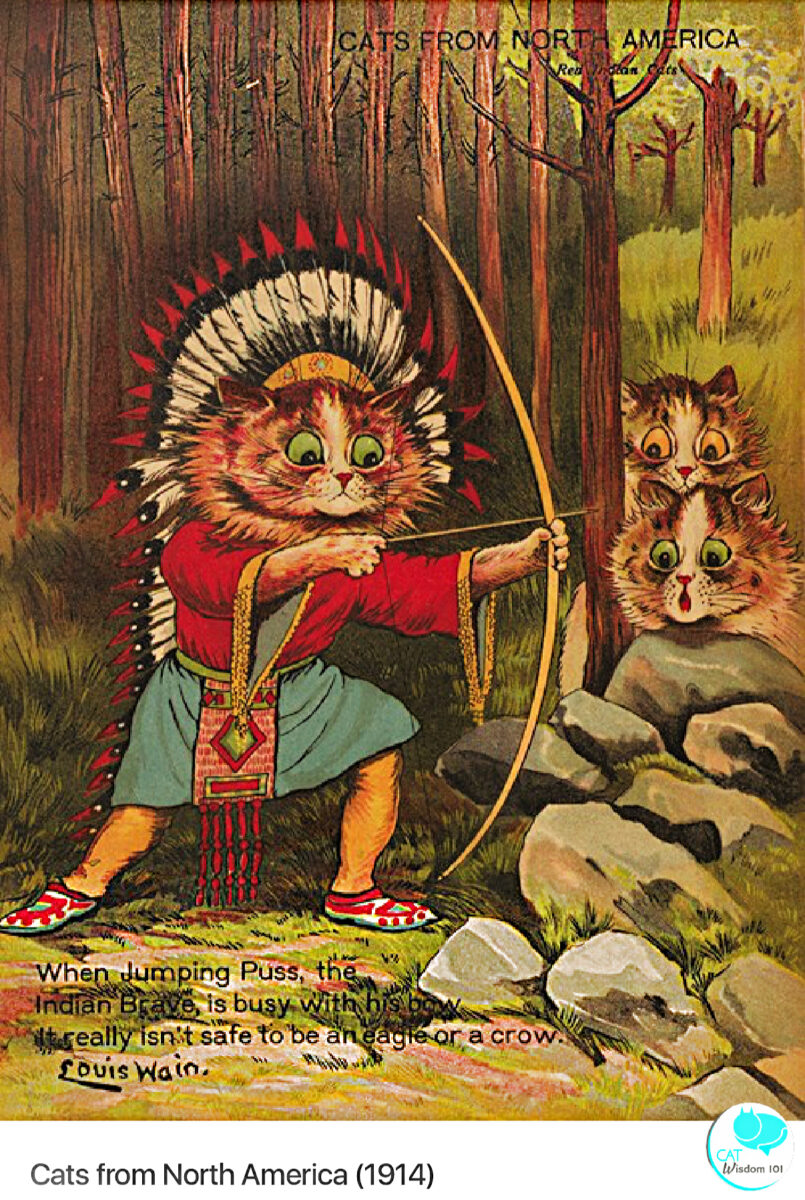
The representation of North America, or the United States, through an Indigenous figure is woefully politically incorrect. It reflects a common period convention in which an entire continent was represented by a supposedly “typical” figure: a Native American, a cowboy, or another simplified frontier image.
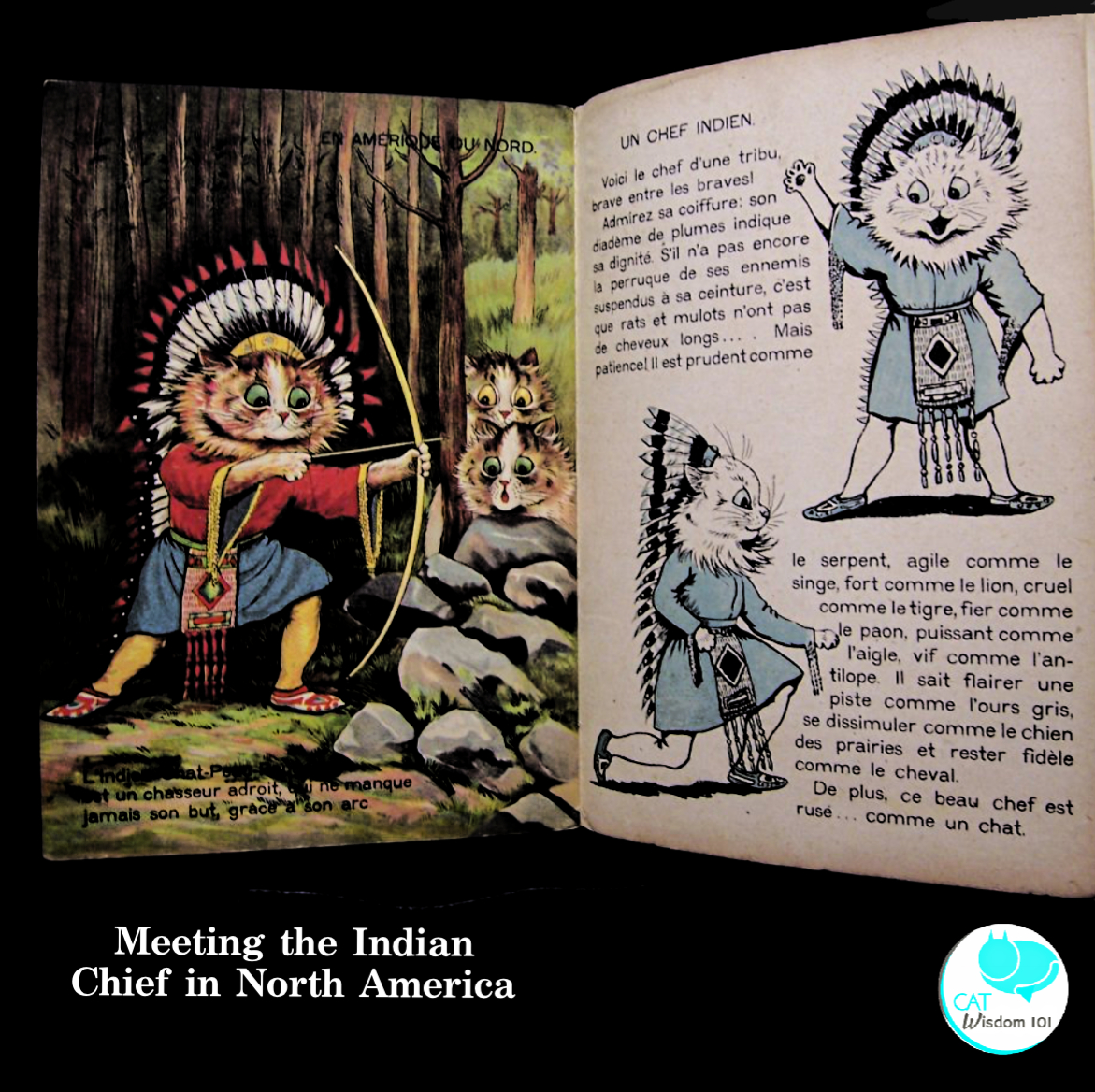
To modern readers, this is clearly reductive. It ignores the diversity of the United States and turns Indigenous identity into a costume or visual shorthand.
At the same time, the image helps us understand how children’s books, postcards, advertisements, and popular entertainment taught geography at the time not through detailed information, but through instantly recognizable stereotypes.
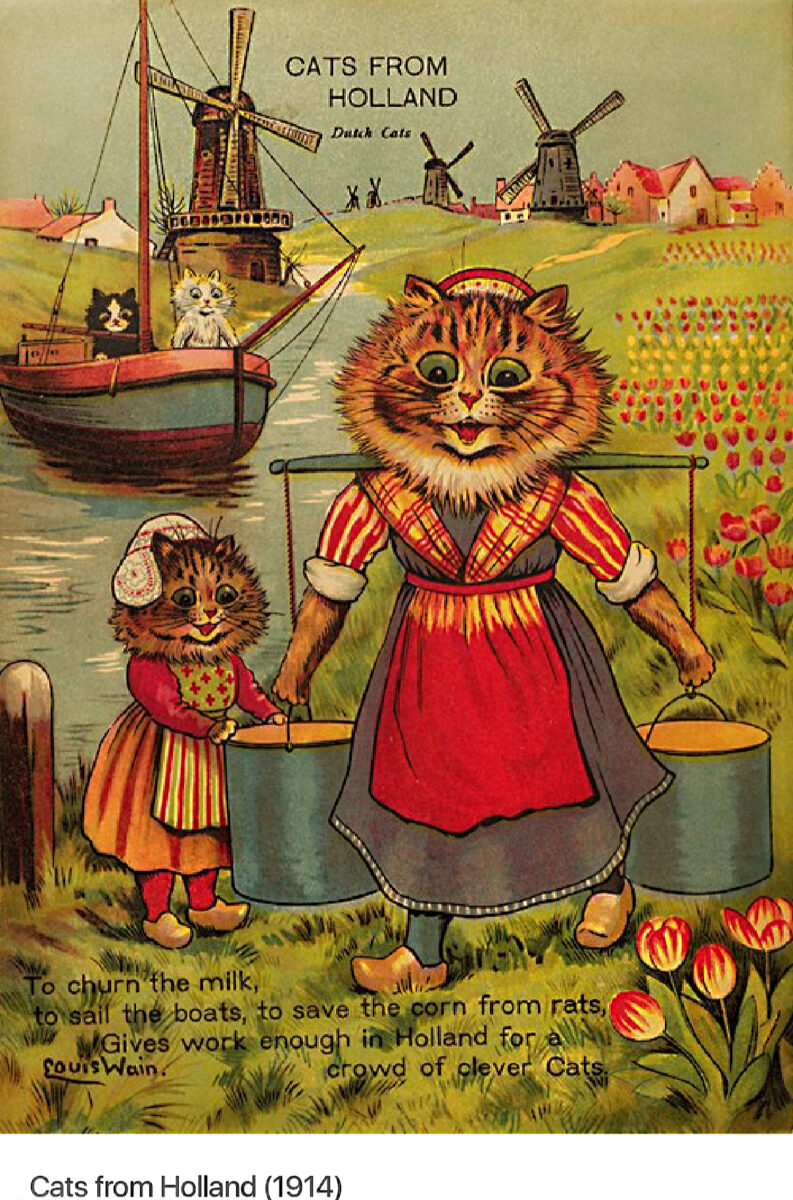
That tension is part of what makes the book worth examining today. Wain’s cats are adorable, but the world they inhabit is not neutral. Their costumes encode ideas about nationality, race, empire, and “foreignness.” The humor softens those ideas, but it does not erase them.
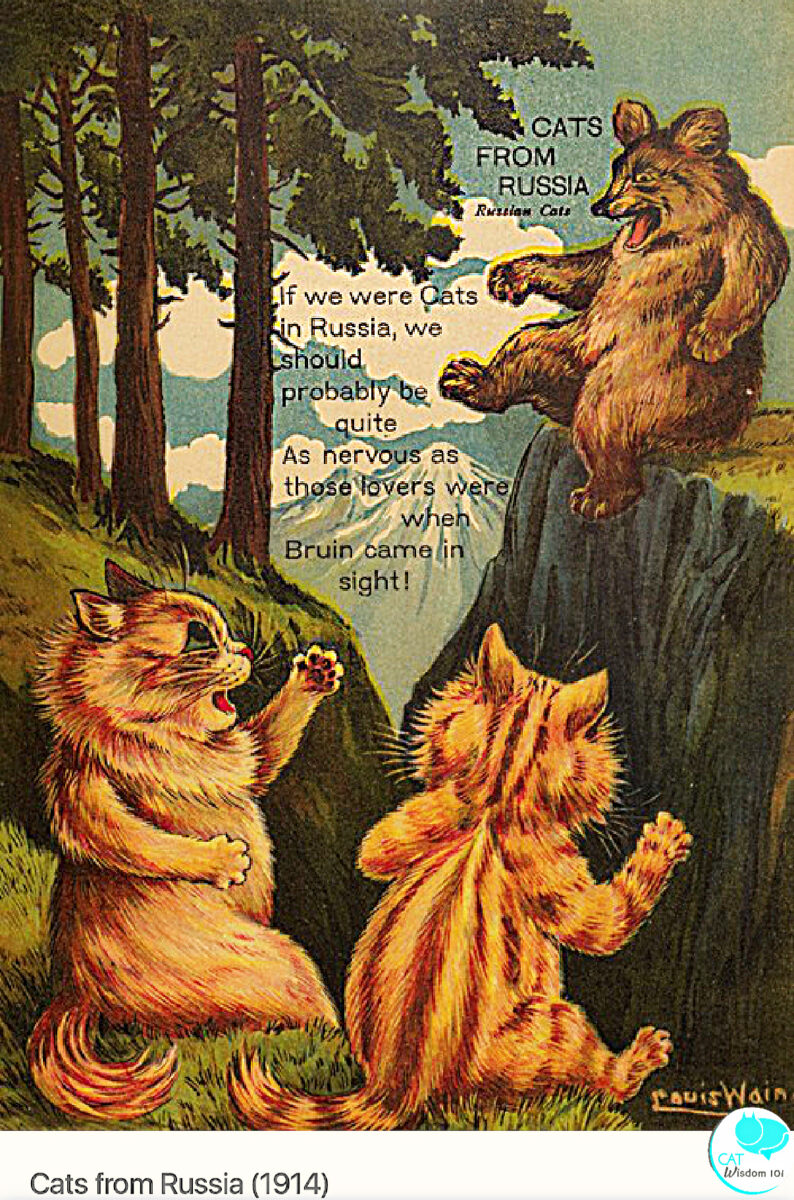
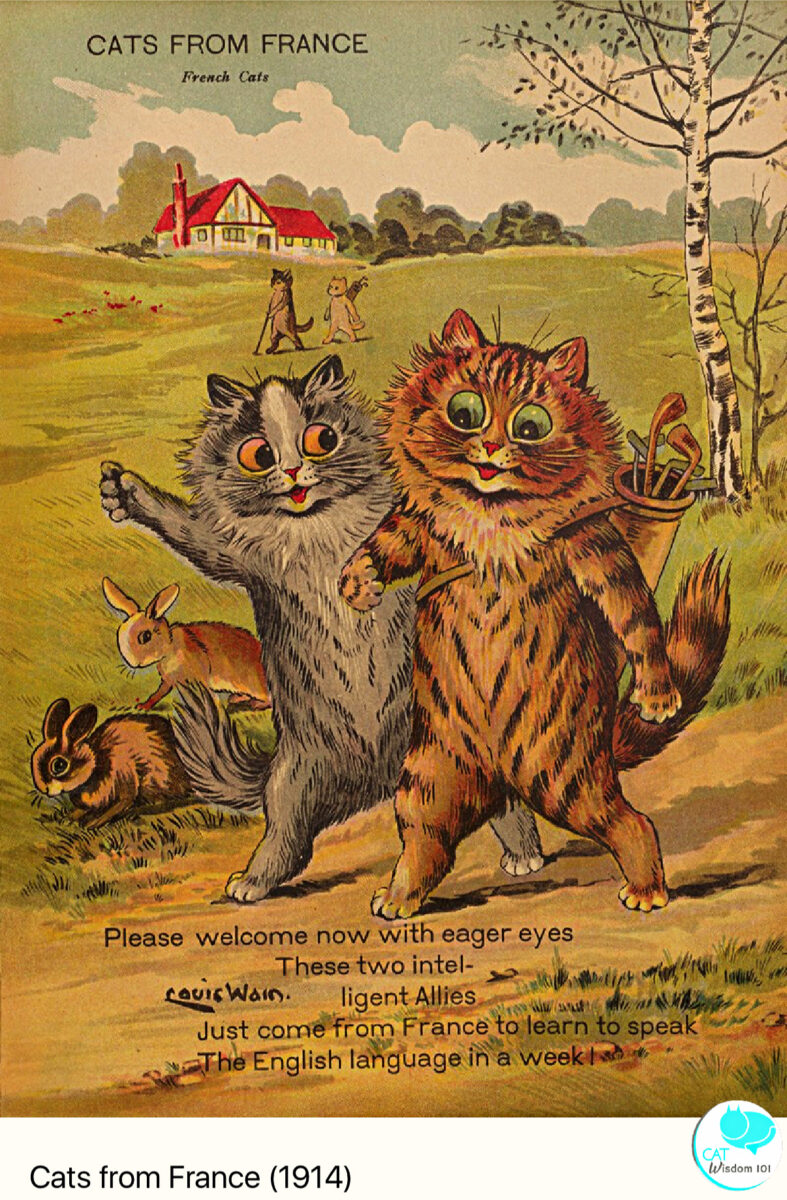
I found even more curious was the difference in translations. In the French version of the book, the interpretations of the illustrations were entirely different. The French cats are simply playing golf. The English cats claim the French cats are learning English but a subtle dig to the centuries old rivalry between the two countries.
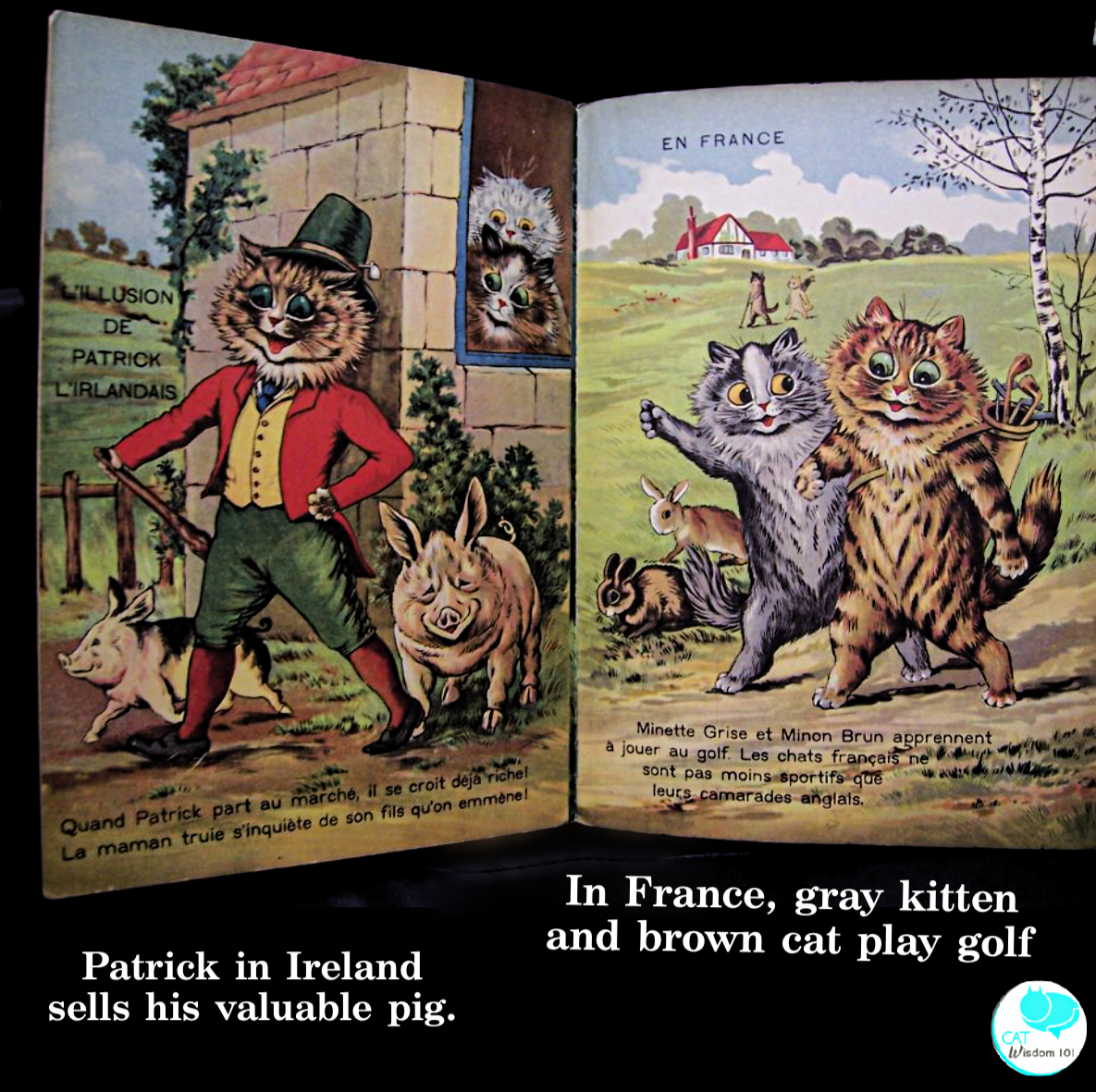
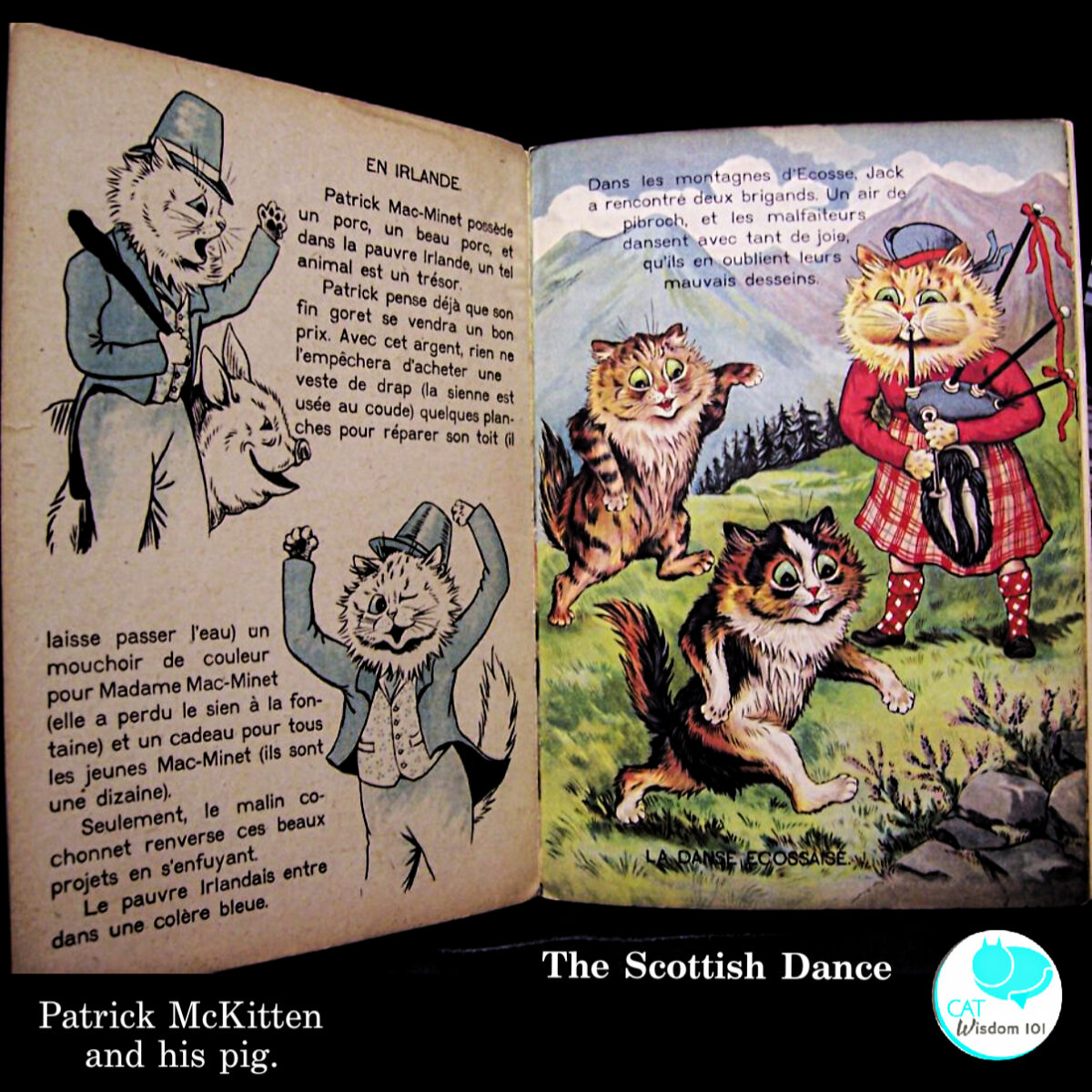
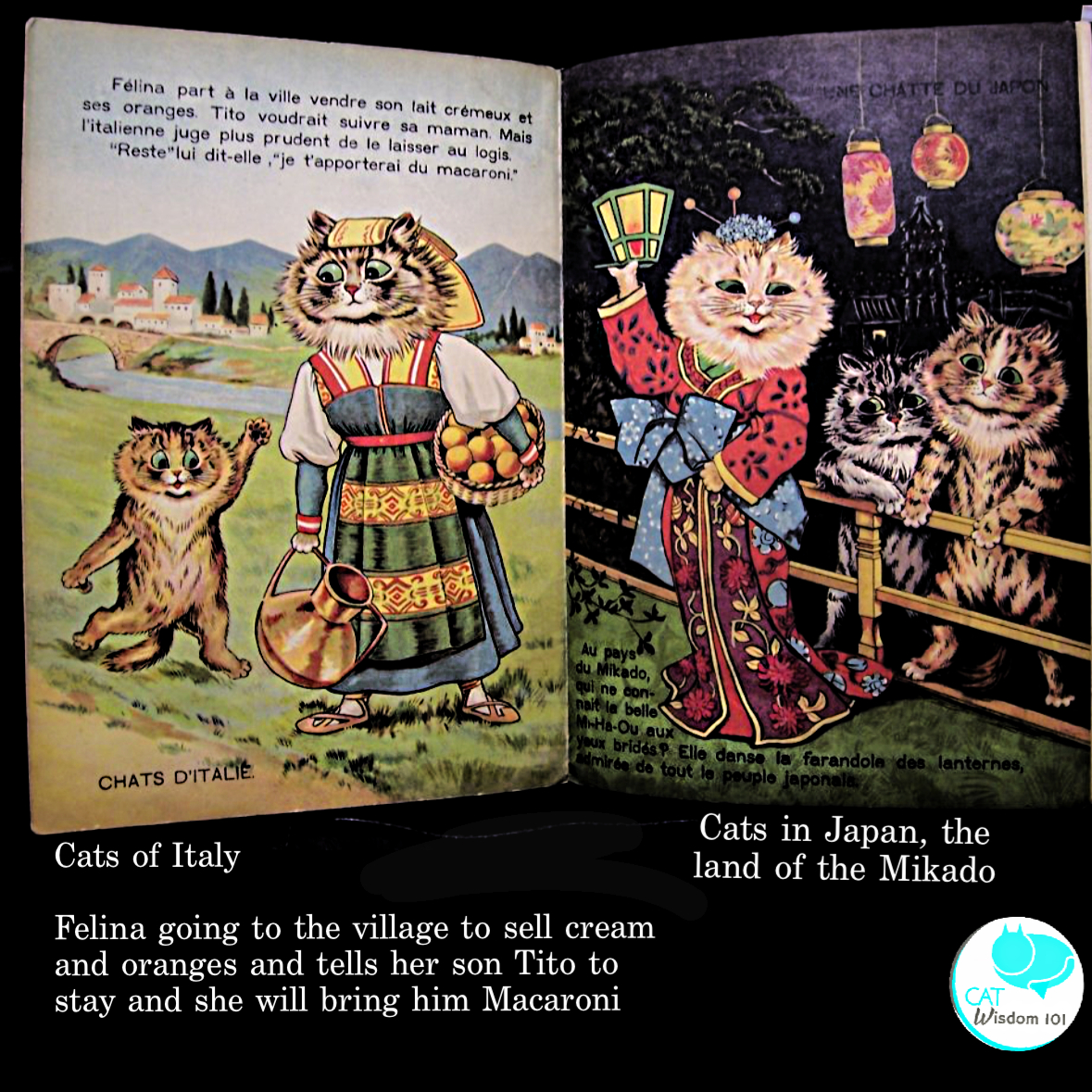
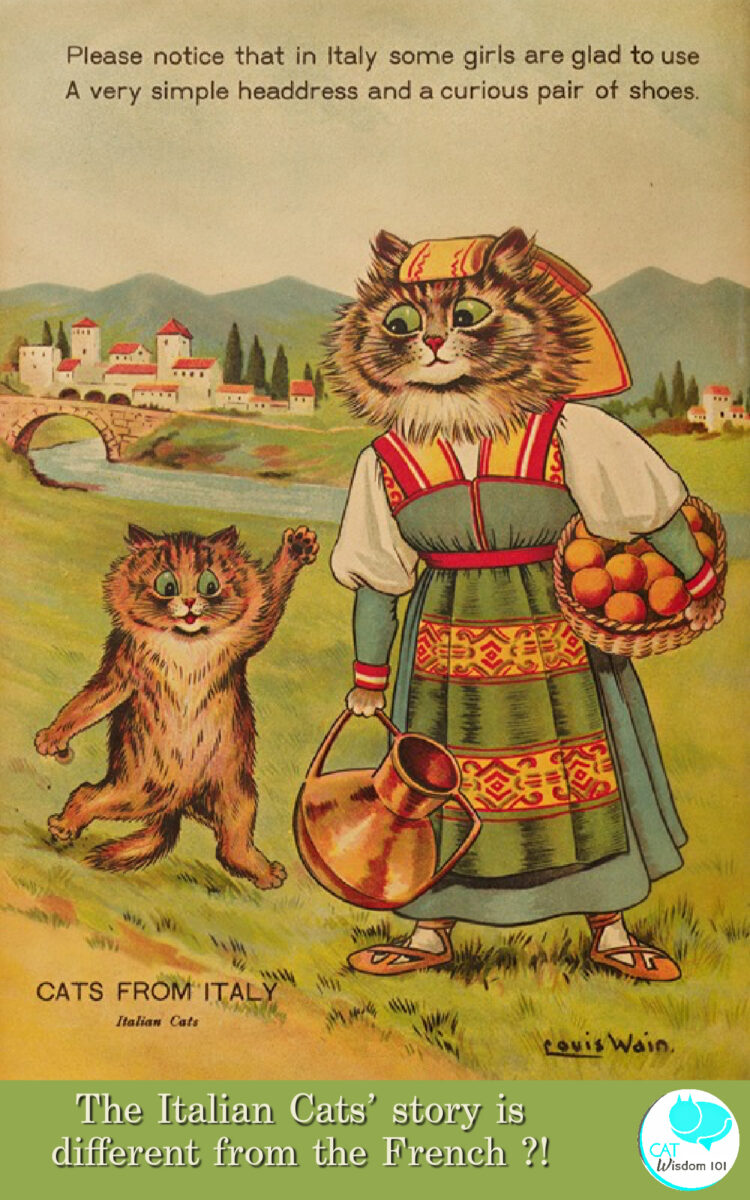
The English publisher enjoyed an international reach. London; Paris; New York: Raphael Tuck & Sons, Ltd.
Tuck specialized in illustrated children’s books, postcards, greeting cards, and gift books. Its products were designed to be attractive objects as well as reading material.
Vivid color, large pages, humorous characters, and recognizable subjects made books like this appealing to families who wanted an inexpensive but visually impressive More than a thousand of Wain’s images appeared in postcard form between approximately 1900 and 1940.
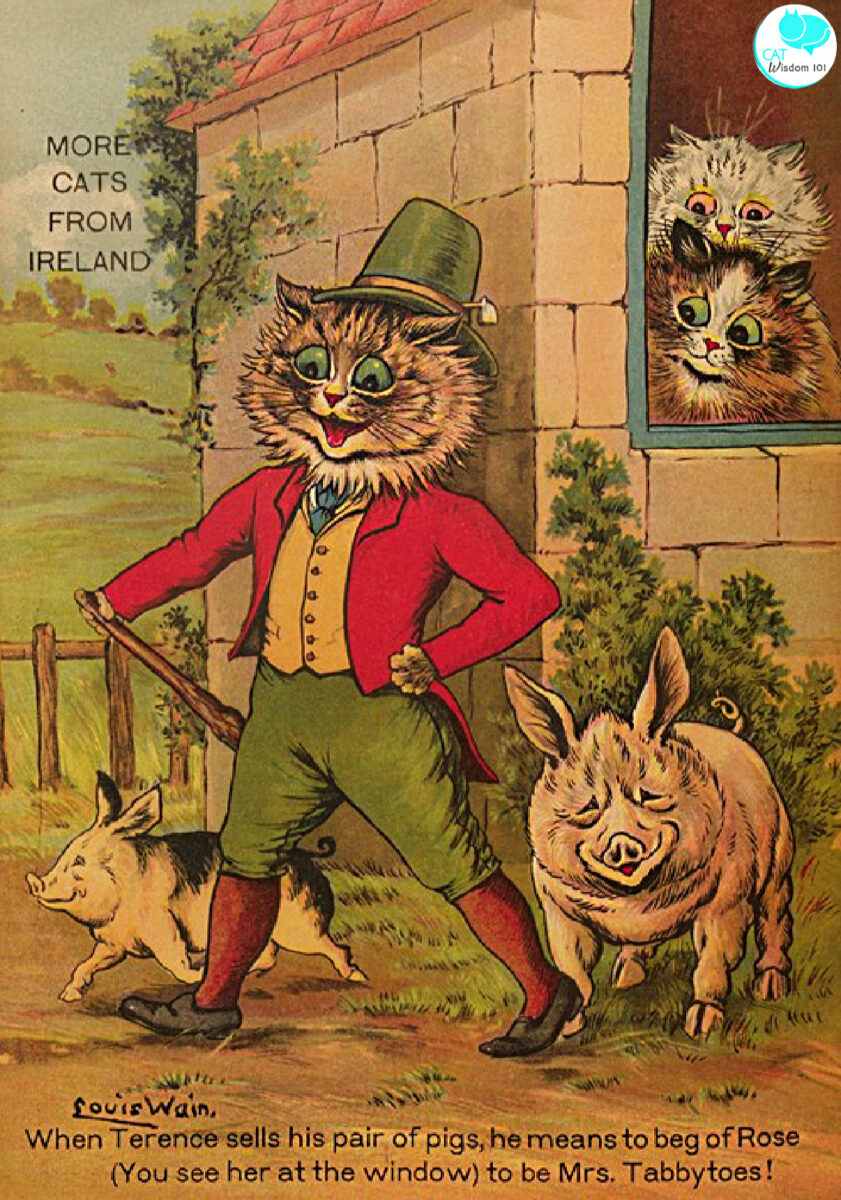
For many people, his cats were encountered not in an art gallery but on a postcard, nursery book, greeting card, or colorful gift publication such as Cats of Many Lands.
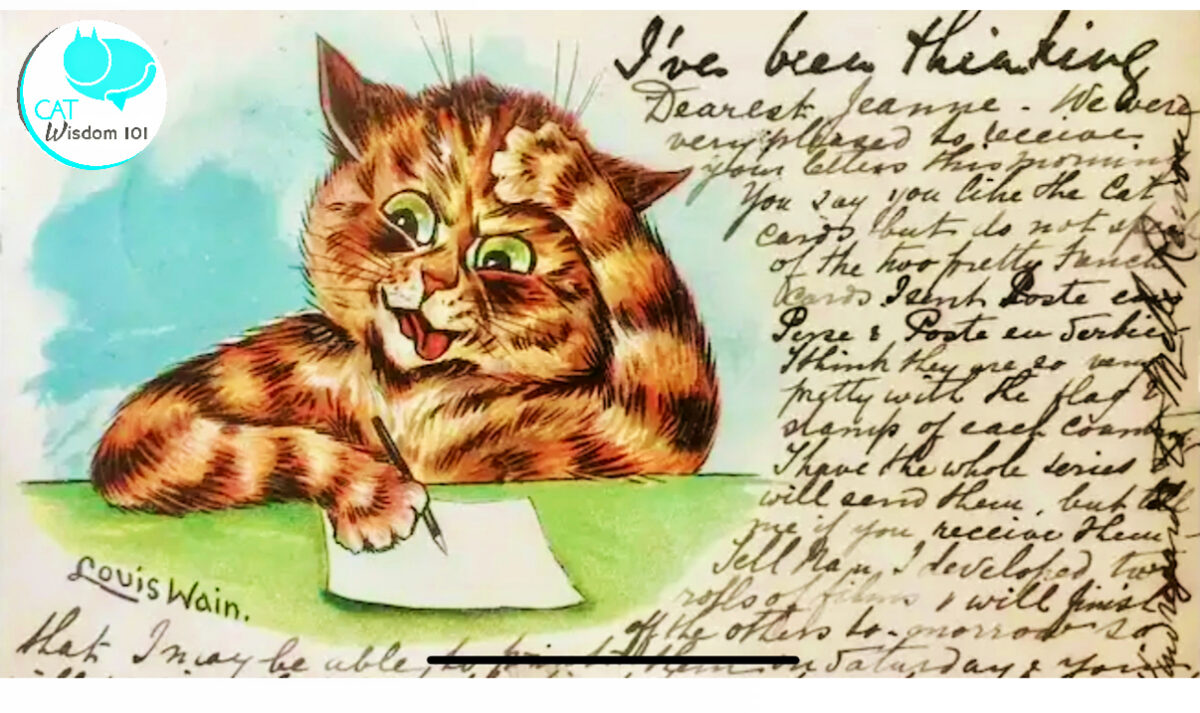
That’s another reason I tbink Cats of Many Lands is valuable. It belongs to the earlier, enormously popular phase of Wain’s career, when his cats were still firmly rooted in recognizable Edwardian social life. They are comic characters, but they are also limited observers of the world that Wain and his readers knew.
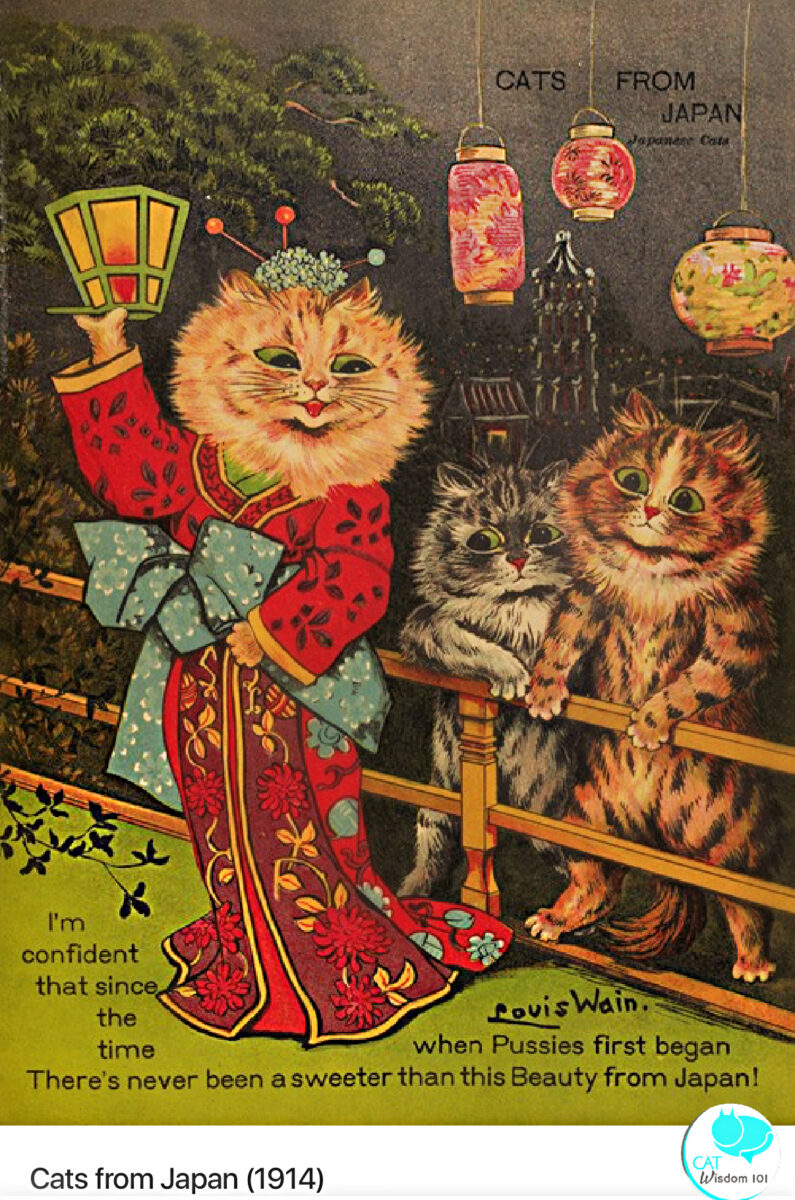
For a cat lover, Cats of Many Lands is delightful on the surface: a parade of whiskers, costumes, comic poses, and imaginative verse.
For a historian, it is a small cultural document from the world before and at the beginning of World War I. It captures the popularity of Louis Wain, the commercial reach of Raphael Tuck & Sons, the importance of illustrated children’s books, and the period’s habit of turning national identity into costume.
Its charm and its limitations belong together. The cats invite us to smile, but they also invite us to ask what children were being taught about the world and who was allowed to represent each country. That makes this more than a pretty old cat book.
It is a colorful snapshot of how an English illustrator and an international publisher imagined “many lands” just as the old prewar world was beginning to disappear.
For me, it helped me reframe the cute cat books of Wain on a deeper level. How about you? I’d love to hear your thoughts.


8 Comments
Neil Taylor
Lovely to read Layla…but where’s the Aussie Moggy? 😆
Layla Morgan Wilde
Right! So many missing countries.
Meezer'sMews&TerrieristicalWoofs
I woud love to have this in our ‘library’! A fun exose about cats…,imortalized in cute illustrations and verse. I don’t find anything much wrong with it…but I can see where some people might take offense…a sign of the times these days.
Layla Morgan Wilde
True. I didn’t include the really naughty bits.
messymimi
People’s books are a product of their time, not ours, so it doesn’t surprise me his book is not politically correct, but it is certainly amazing.
Layla Morgan Wilde
Agreed I think the illustrations are just gorgeous.
Ellen Pilch
The cats are adorable. I think everything is overanalyzed nowadays. XO
Layla Morgan Wilde
Yeah, such as the Digital Age😹